“Missional motherhood knows all too well that we are nurturing life in the face of death.” Gloria Fuhrman, DesiringGod.com
It is easy to think God’s calling to serve Him is exclusively “out there” and neglect our primary calling as parents.
“Missional motherhood knows all too well that we are nurturing life in the face of death.” Gloria Fuhrman, DesiringGod.com
It is easy to think God’s calling to serve Him is exclusively “out there” and neglect our primary calling as parents.
45 “Our generation is prone to amuse itself with fragmentary information and resources. We flip on the TV for brief programs, and then we think we know about the subjects they dealt with. A few paragraphs in a magazine, and we think we’ve formed an opinion. Whata is happening so often is that we are merely forming a habit of amusing our interest, and then forgetting the fragments. This is not education.” Susan Schaeffer Macaulay, For the Children’s Sake, 1984
Personal reflection:
I spent a few years after college indulging in such poor mental habits. A few youtube videos and articles down and I considered myself above everyone else because of my new esoteric opinion. I barely finished reading any books; I would check out stacks and stacks of them from the library and flip through the images and captions but rarely commit to read the whole thing. I was bored with reading, always hungry for more fragments of information that I felt I could build my, what seemed expansive, understanding upon. Chasing the ever bigger picture, but spreading thin without depth. Like oil spreading on an ocean, looking down with blissful curiosity, but never doing the deep work of exploring and coming to understand every aspect and creature of the depths. Pseudo-satisfaction in the sparkly mystery of it all. Thank God He gave me the gift of a son to bring me out of my shallow thoughts and motivate me to dig deeper. In the process of digging deeper I’ve also discovered that I can get to know God personally, even though He is infinite, He has made Himself known to us in many tangible ways, through His creation and His Word.
Educating the Wholehearted Child by Clay and Sally Clarkson
The fear of the LORD is the beginning of wisdom. Proverbs 9:10
And so, over-entertained, pushed, pulled, and tidied up, often the child of today has the rich creative play-response crushed out. Sometimes the only thing his dulled eyes focus on is a premature adolescence which will release him from childhood. — Susan Schaeffer Macaulay
Home-Centered Holistic Model
The best learning process happens through an informal “relational process.” Focus is on the child and learning dynamics of the home. The goal of learning is to become conversant with many ideas and concepts. Real books, real life and family are the primary sources of learning. A child can be trusted to learn: it is his nature.
Education as Natural Activity:
Your home should be a warm, vibrant place where your children love to learn as freely and as naturally as they love to play.
Whole-person-based learning structure: provides time and freedom to unleash the child’s curiosity, creativity and natural desire to learn. Instruction aims high to challenge and draw out the children’s God-given gifts and talents. All children advance at their own pace. There is no comparison, rather complementary collaboration.
“Therefore, teaching, talk and tale, however lucid or fascinating, effect nothing until PERSONAL ACTIVITY be set up; that is, self-education is the only possible education; the rest is mere veneer laid on the surface of a child’s nature.” Charlotte Mason, A Philosophy of Education, 1925
flexible curriculum: choose ‘living books’ which complement, grow and expand interests.
Parent=learning facilitator. The child is trained and expected to depend on his own independent learning abilities and skills.
No wasted time: all of life is a classroom
Every activity/involvement is a learning opportunity. Child advances in studies on basis of knowledge/competence, not age/grade. Tested primarily for long-term global knowledge (as opposed to short-term linear knowledge). Retention is high. Written test unnecessary, oral testing more effective and better gauge of learning. Evaluation: children’s progress guided through personal interaction and direction. Creativity: able to cultivate maximum creativity in children by providing a dynamic, hands-on learning environment.
Goal: heart knowledge with focus on understanding
“God never meant for learning to become a burden, either for children or for parents. H meant it to be a natural, enjoyable part of family life. Our culture has wrested education from families and turned it into an unnatural tedious drudgery of classrooms, textbooks and tests. And as children’s minds and hearts wilt under the crushing conformity of ‘school,’ parents likewise begin to wither intellectually as the roots of learning are severed from the family tree. As you bring education back home, bring with it the joy of learning, both for you and your children. Set the pace by showing them, by example, that you value learning, and they will follow. If your children are growing strong in these seven mental muscles (Habits, Appetites, Language, Creativity, Curiosity, Reason and Wisdom) – if you are strengthening their minds to learn for God – then you will have little reason to be concerned about their ‘education.’” (Clarkson, 55)
45 “Our generation is prone to amuse itself with fragmentary information and resources. We flip on the TV for brief programs, and then we think we know about the subjects they dealt with. A few paragraphs in a magazine, and we think we’ve formed an opinion. Whata is happening so often is that we are merely forming a habit of amusing our interest, and then forgetting the fragments. This is not education.” Susan Schaeffer Macaulay, For the Children’s Sake, 1984 (read my personal reflection on this here)
You don’t need intense structure to keep your children motivated/disciplined in learning. Instead, focus on establishing good HABITS in everyday learning, work, play and life:
Attention/concentration: ability to retain information from a single reading (have child narrate it to you following reading)
Excellence: expect and affirm real personal effort in your children.
Orderliness/neatness: proper use, storage and care of materials, self, and home.
Truthfulness: it is easy to fall into the habit of self-deceit. Practice truthful self-awareness, discerning what you do know and being honest about what you don’t.
Self-control: govern inner thoughts/feelings; healthy work/rest habits.
Diligence: moving forward despite distractions; work hard without being told, go beyond getting by.
Romans 11:33, 36
Oh the depths of the wisdom and knowledge of God! How unsearchable are His judgements and how inscrutable His ways! …from Him and through Him and to Him are all things. To Him be glory forever! Amen
https://youtu.be/iLylpRn9uXQ

STRUCTURE: 3 main themes
Centering, Expansion, and Focus
Centering: reading
The Jesus Bible Storybook is our favorite read. Codan stays still and listens to long readings. It’s perfect for naptime and bedtime and waking up.

We also love to look at big picture books

+breakfast, share dreams from last night; goals, ideas for the day
Expansion: exploring the damp creekbed
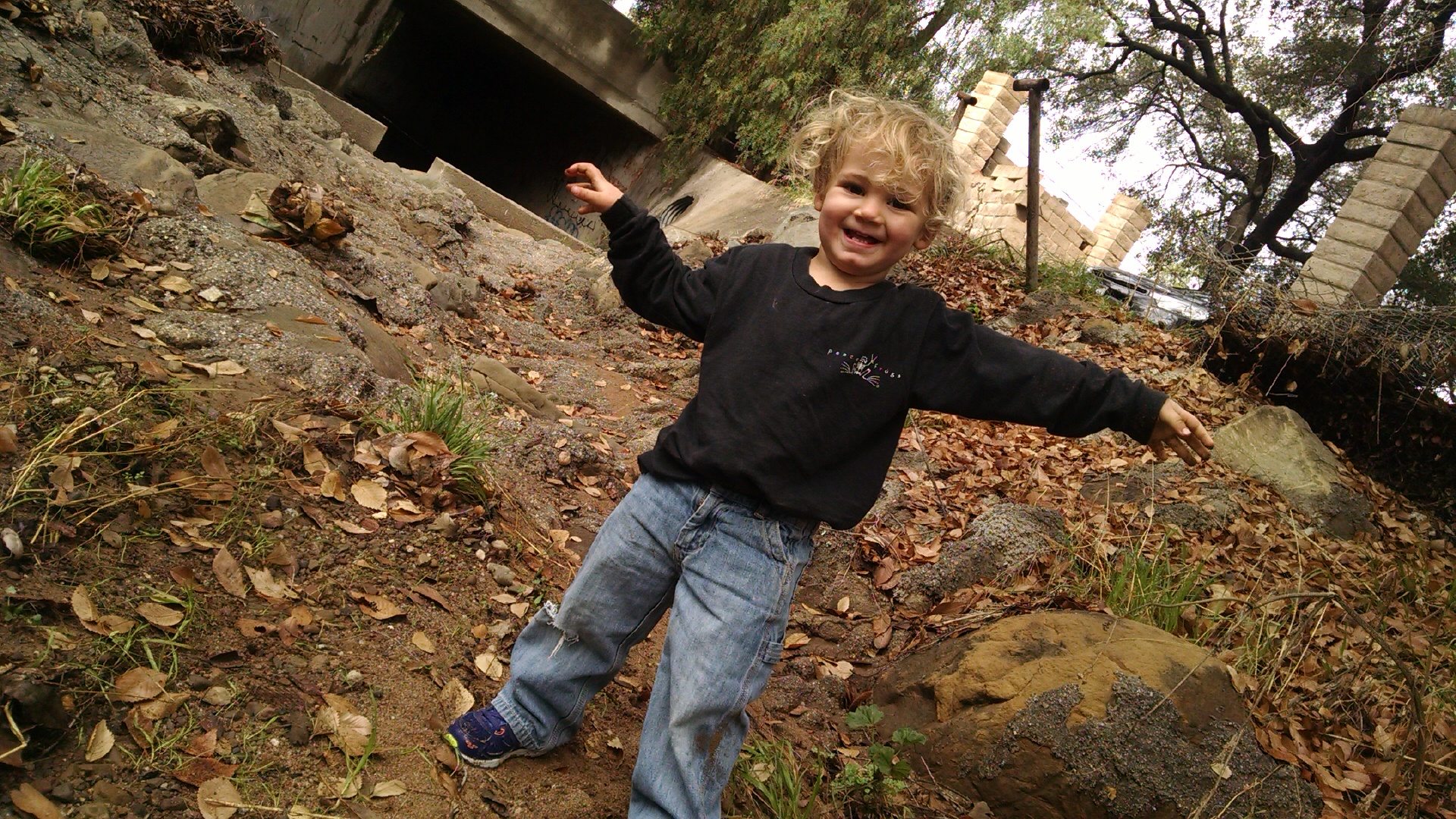
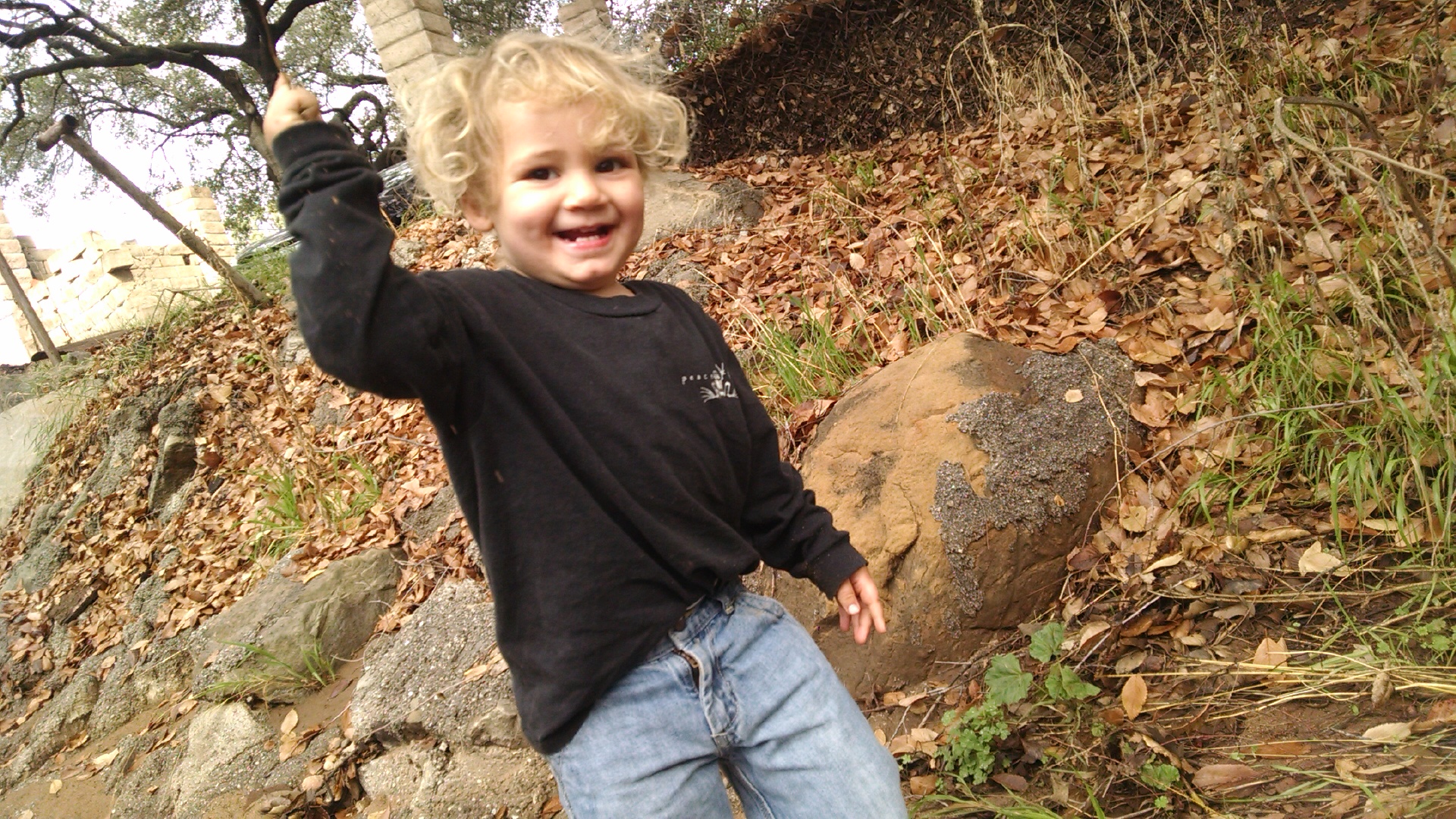
Climbing, exploring and socializing at the park
Playdates
Focus: expression

We love these brilliant smooth Faber-Castell beeswax crayons

Architect/demolition specialist in training
Free time, then repeat rhythm (though less structured)
Centering : lunch
Nap time… Sometimes.
Expansion
Grocery store expedition
Hike in the mountains
evening Independent Focus ideas:
20-30 min educational show (occasionally), art, blocks, toys, sandbox, gardening

Drawing in sugar Zen garden

Cairn building

studying physics! (momentum, friction, velocity, acceleration, potential energy, etc)
Centering: Dinner, cleaning, self care, read books
Expansion again in dream land!
Rewards: he’s nearly potty trained – thanks to a little help from my friends mini m&ms – he points to where I keep the tube, I pull it out and he can’t wait to get on the potty. Only a few days of reminding and it’s become a strong habit. When he starts reading we will establish an appropriate reward system also, including (but not limited to) Pizza Hut’s Book It! program.
Favorite resources:
Educating the Wholehearted Child by Sally and Clay Clarkson
we are enjoying PUREFLIX, like Netflix but it’s selection is carefully curated for good moral content.
Looking forward to diving into these books in our whole book education:
Christian Heroes: Then and Now
Artist Thijme Termaat’s reflection on his educational ups and downs
Sir Ken Robinson: Public Schools Kill Creativity

ARTIST:
Exodus 28:3-4 /Exodus 31:1-11 /Exodus 35:30-35
The gift that gives the believer the skill to create/design artistic expressions that produce a spiritual response of strength and inspiration. Another type of gift closely related to this enables a believer to build, maintain, or repair items to communicate God’s truth
People with this gift tend to:
– work with wood, cloth, paint, metal, glass, and other raw materials
– make things which increase the effectiveness of other’s spiritual lives
– design and build tangible items and resources to advance the kingdom of God
– work with different kinds of tools and are skilled with their hands
– use the arts to communicate God’s truth
– develop and use artistic skills such as drama, writing, art, music, dance, movies, etc.
– use variety and creativity to engage people and invite them to consider Christ
– challenge people’s perspective of God through various forms of the arts– demonstrate fresh ways to express the Lord’s ministry and message
Edward de Bono: “…the mind is habitually uncreative – it is usually preoccupied with organising masses of incoming data into convenient patterns. Once this pattern is established, then the mind tends to rely upon that pattern in future situations, in order to facilitate decision making & action in an otherwise complex world…” (The Use of Lateral Thinking).
“…the whole of creation is groaning in travail as it longs for its redemption. Creation is good, but it is not God. It is beautiful, but its beauty is at present transient. It is in pain, but that pain is taken into the very heart of God and becomes part of the pain of new birth. The beauty of creation, to which art responds and tries to express, imitate and highlight, is not simply beauty which it possesses in itself but the beauty which it possesses in view of what is promised to it, as an engagement ring is beautiful not least because of the promise it symbolizes…If Christian artists can glimpse this truth, there is a way forward to celebrating beauty, to loving God with all the soul, without lapsing into pantheism on the one hand or harsh and negative “realism” on the other. Art at its best not only draws attention to the way things are but to the way things are meant to be, and by God’s grace to the way things one day will be, when the earth is filled with the knowledge of God as the waters cover the sea. And when Christian artists go to that task they will be contributing to the integration of the heart, mind and soul which we seek, to which we are called. They will be pointing forward to the new world God intends to make…” (N.T. Wright, Evil and the Justice of God, pp. 127-128).
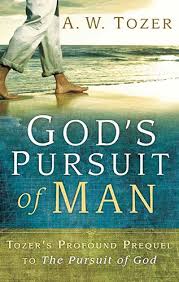
We might well pray for God to invade and conquer us, for until He does, we remain in peril from a thousand foes. We bear within us the seeds of our own disintegration. Our moral imprudence puts us always in danger of accidental or reckless self-destruction. The strength of our flesh is an ever present danger to our souls. Deliverance can come to us only by the defeat of our old life. Safety and peace come only after we have been forced to our knees. God rescues us by breaking us, by shattering our strength and wiping out our resistance. Then He invades our natures with that ancient and eternal life that is from the beginning. So He conquers us and by that benign conquest saves us for Himself. read more
“crave to know God with a vital awareness that goes beyond words, and to live in the intimacy of personal communion.” read more
discover this audiobook and others at christianaudio.com

Galatians 5
1 For FREEDOM Christ has set us free; stand firm therefore, and do not submit again to a yoke of slavery.
16 So I say, walk by the Spirit, and you will not gratify the desires of the flesh. 17 For the flesh craves what is contrary to the Spirit, and the Spirit what is contrary to the flesh. They are opposed to one another, so that you do not do what you want.
Romans 8
There is therefore now no condemnation for those who are in Christ Jesus. 2 For the law of the Spirit of life has set you free in Christ Jesus from the law of sin and death. 3 For God has done what the law, weakened by the flesh, could not do. By sending his own Son in the likeness of sinful flesh and for sin, he condemned sin in the flesh, 4 in order that the righteous requirement of the law might be fulfilled in us, who walk not according to the flesh but according to the Spirit. 5 For those who live according to the flesh set their minds on the things of the flesh, but those who live according to the Spirit set their minds on the things of the Spirit. 6 For to set the mind on the flesh is death, but to set the mind on the Spirit is life and peace. 7 For the mind that is set on the flesh is hostile to God, for it does not submit to God’s law; indeed, it cannot. 8 Those who are in the flesh cannot please God.
9 You, however, are not in the flesh but in the Spirit, if in fact the Spirit of God dwells in you. Anyone who does not have the Spirit of Christ does not belong to him. 10 But if Christ is in you, although the body is dead because of sin, the Spirit is life because of righteousness. 11 If the Spirit of him who raised Jesus from the dead dwells in you, he who raised Christ Jesus from the dead will also give life to your mortal bodies through his Spirit who dwells in you.
listen/read http://www.desiringgod.org/messages/walk-by-the-spirit


